
To choose a marketing budget management platform, test it against your own budget structure, approval rules and ERP, not a vendor's demo data. Ask how it handles seven things (budget structure, approvals, ERP integration, spend data from vendors and platforms, proof and invoices, security and hosting, and rollout), insist on seeing which answers are standard features and which are custom work, and pilot it with one team before you sign for the whole company.
If you've been asked to run the selection, you'll find that most "best marketing budget software" lists don't help much. They rank tools on features, ease of use and price, mix campaign planners with finance tools, and are written for small marketing teams. None of them asks what happens when your budget has a dozen levels, your approvals follow a delegation-of-authority policy, and every purchase order has to land in SAP.
This guide is the question list we'd want in your hands. It comes from the RFPs and evaluations large companies have run with us this year, generalised so it works for any vendor, including us.
If you already have a shortlist, our vendor-by-vendor comparisons cover where each tool focuses. This guide is about how to test any of them.
What should you ask about budget structure?
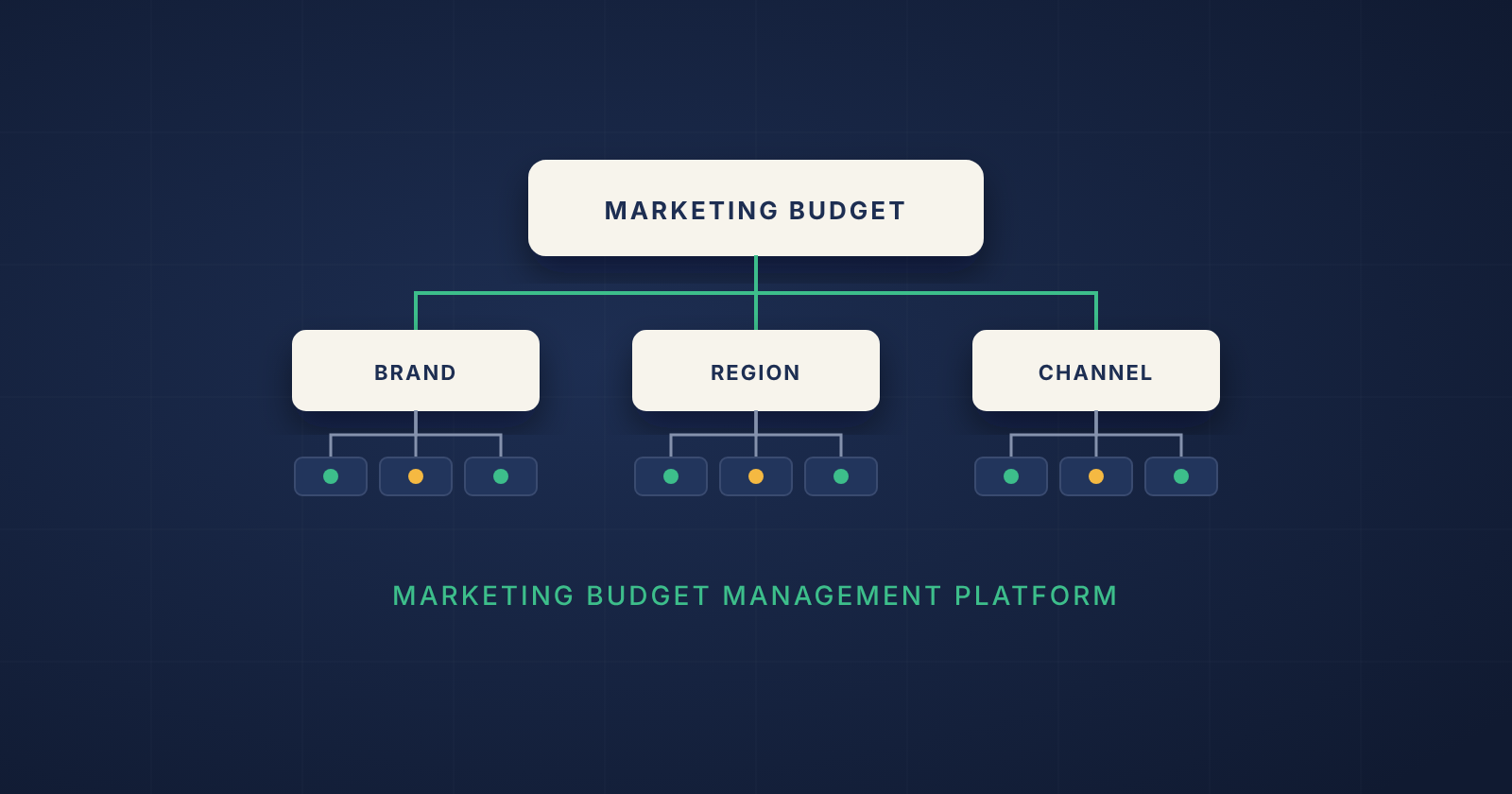
Ask the vendor to load your real budget hierarchy before the demo, then ask these questions while it's on screen.
Can it hold our hierarchy at its real depth (company, business unit, brand, region, channel, activity) without flattening it?
Can we run a second view alongside it, such as region against brand, without keeping two budgets?
At which level is money held, and at which level is it only reported?
Can each level have its own owner, with rights to see and act only on their part?
Can we budget annually and release quarterly, with an outlook that changes while the annual number stays locked?
What should you ask about approvals and reallocation?
Approvals are where marketing feels the tool every day, so test them as the people who'll use them.
Can approval limits be set by line, by amount and by type of action (new spend, increase, move between lines)?
What happens when an approver is away? Is there delegation, and is it recorded?
Can a brand head move money within their brand without finance, and does the system stop them going further?
Is every move recorded with who, when, how much and why?
Can approvals be done on a phone?
Good answer: your delegation-of-authority policy, entered as rules, routing a test request to the right person. Red flag: approvals that are really email notifications with a link.
What should you ask about ERP and SAP integration?
Ask exactly which documents flow in which direction, and who builds and owns the integration.
Which documents does it exchange with SAP: purchase requisitions, purchase orders, service entries, invoices, payment status?
Is the integration two-way, or does it only read from SAP?
How does each budget line link to SAP: WBS element, internal order, cost centre?
Which SAP versions has it been connected to, and does it need standard APIs or custom connectors for ours?
Who builds the integration, and who fixes it when SAP is upgraded?
Good answer: a clear list of documents and directions, and named experience with your SAP version. Red flag: "we export a CSV." That's a report, not an integration, and someone will be reconciling it by hand within a quarter.
What should you ask about spend data from vendors and platforms?
Most marketing spend data arrives from outside the company, so ask how it gets in and how clean it is when it does.
How do media partners and vendors submit plans, estimates and invoices? Their own format, or a template?
Does it connect directly to Google, Meta ANd DV360 for digital delivery and spend?
How does it handle TV, print, outdoor and on-ground activity that has no data feed?
What happens when a vendor's file has errors or doesn't match the plan?
Do vendors need licences, and what do they see?
Good answer: a vendor portal or template that checks the file as it's uploaded. Red flag: "your team uploads the vendor's Excel." Then your team is still the reconciliation engine.
What should you ask about proof of work and invoices?
Ask how it checks that the work happened before an invoice is paid, because that's where paying for work that didn't happen gets caught.
How is proof captured for each type of spend: aired spots, platform delivery, photos of outdoor and on-ground work?
Is outdoor and on-ground proof taken on location, with time and place, or uploaded from a phone gallery?
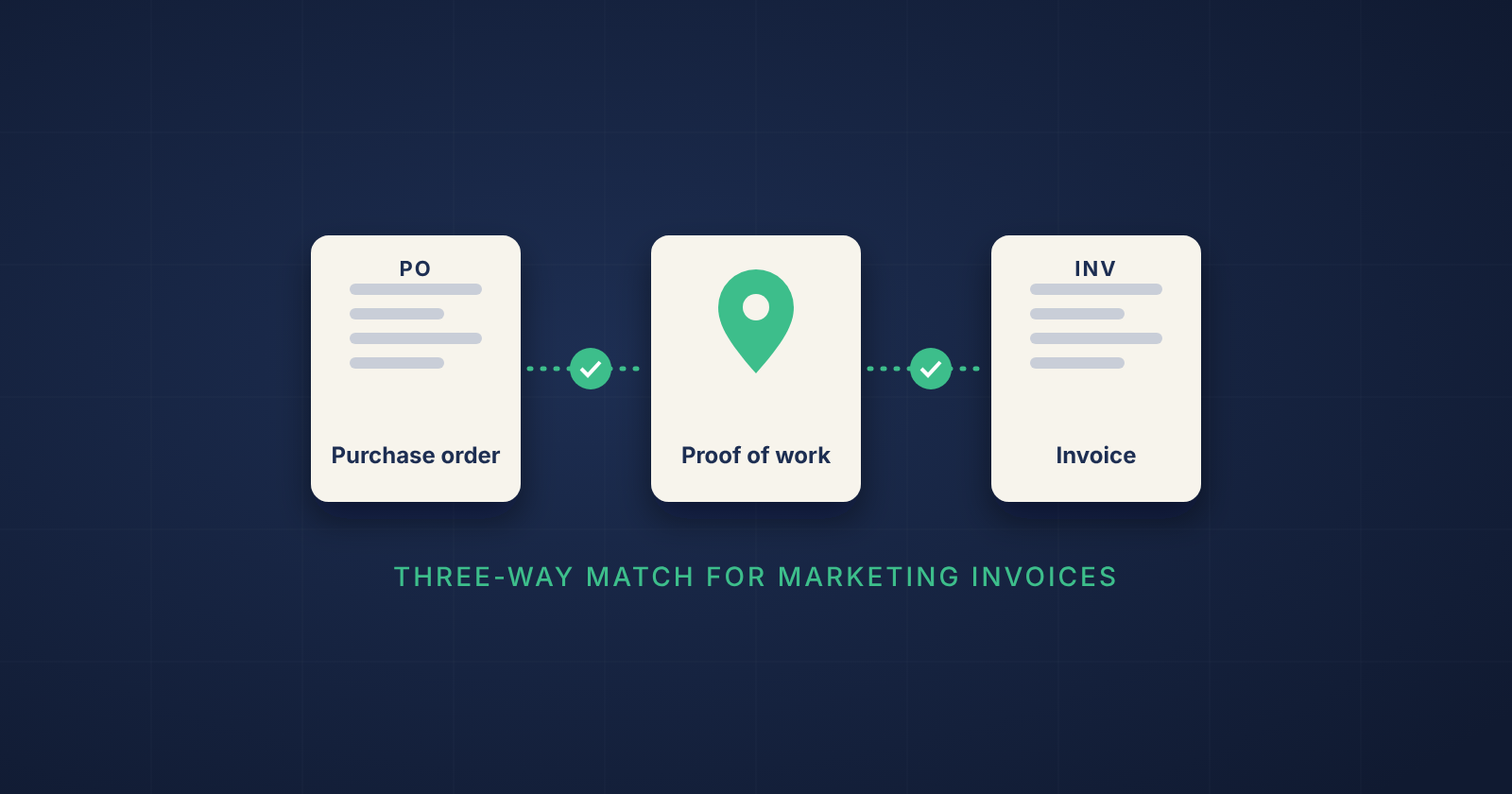
Does it match purchase order, proof and invoice before payment, and what does it do with a mismatch?
Which invoice checks are automatic: PO number, GST numbers, e-invoice reference, digital signature?
Can it part-pay what's proven and hold the rest?
Our guide to three-way matching for marketing invoices covers what a good answer to the third question looks like.
What should you ask about security, hosting and audit?
Your IT and audit teams will ask these anyway; asking them early saves a month.
Which security certifications does it hold, and can we see the reports?
Can it run in our own cloud account, or only in the vendor's?
Does it support our single sign-on and multi-factor authentication?
Who at the vendor can see our production data?
Can auditors get their own view-only access, and can they extract what they need without our help?
Good answer: certificates on request and a hosting option that matches your IT policy. Red flag: vagueness about who can access production data.
What should you ask about rollout and adoption?
Marketing systems more often stall on adoption than on features, so ask how the vendor gets people to actually use it.
Which parts of what we've seen are standard, which are configuration, and which would be custom development?
Can we start with one module for one team and add the rest later?
What does implementation involve on our side: data, people, weeks?
What support is there after go-live, and for how long?
How are vendors and regional teams trained?
The first question is the most important one in this guide. Ask the vendor to mark each requirement in your RFP as standard, configurable or custom, in writing. It's the clearest way to compare vendors fairly and the best protection against a project that grows after the contract.
How should you run the demo and the pilot?
Run the demo on your data and the pilot on one team, then decide.
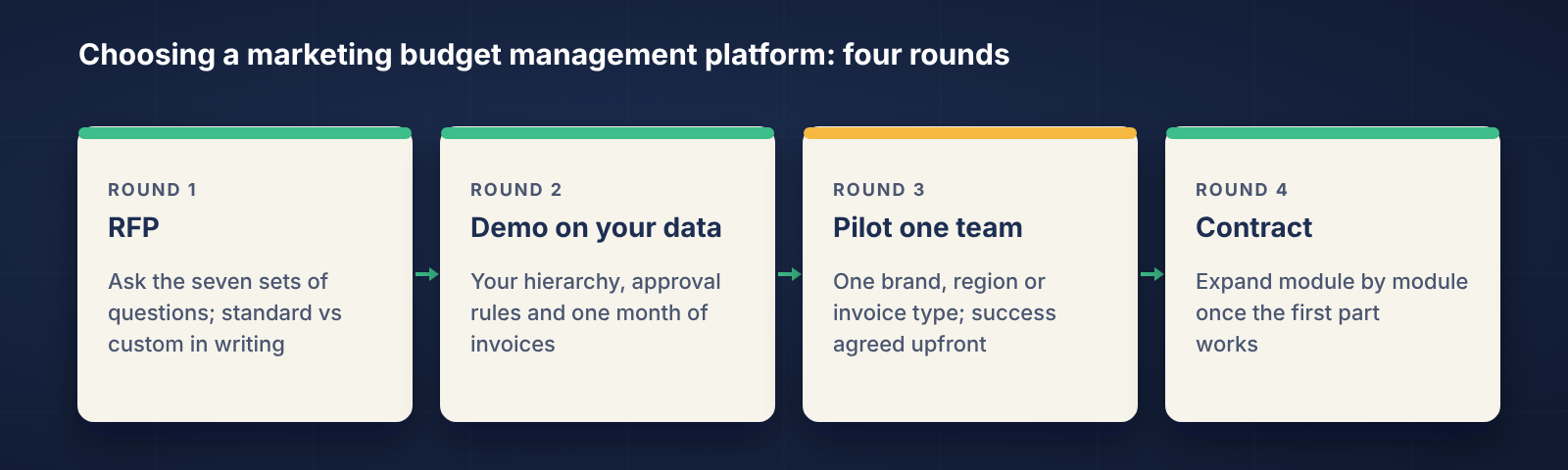
Send each shortlisted vendor a cut of your real budget with the numbers changed, three or four of your approval rules, and one month of vendor invoices. Ask them to load it before the demo and show it back to you. You'll learn more from an hour of your own data than from a day of polished screens.
Then pilot with one team and one job: one brand's budget, or one region's approvals, or one type of invoice. Agree in advance what success looks like: approvals that used to take days now taking hours, a quarter-end report built without a spreadsheet, invoices matched before they're due. In our experience, a rollout that starts with one module for one team goes further than one that tries to switch everything on at once, which tends to turn into a change-management project before it delivers anything.
The best demo is your own budget on someone else's screen. Ask for it, and the shortlist will choose itself.
See how Brandintellé handles your budget, approvals and SAP integration.