
When a brand runs BTL across hundreds of outlets, towns or dealers, the hard part isn't choosing the activity. It's knowing each unit happened before the invoice is paid. Plan BTL in units (outlets, walls, days, meets), write the proof for each unit into the work order, pay only for what's proven, and measure results only after that.
If you run brand or trade marketing for a large company, BTL is probably where a big share of your budget goes and where it's hardest to see what you got. A TV spot leaves a record. A sampling day in two hundred stores leaves a promoter's report, some photos and an invoice, and a regional team that's already moved on to the next activity.
BTL (below-the-line) covers the on-ground work that reaches customers or the trade in a specific place, as opposed to mass media. This guide is for teams running it at scale: the main activity types and the proof each one needs, how to plan and budget them so the invoices can be checked, and how to measure them honestly.
What are the main types of BTL activities?
They fall into a dozen common types. Each one suits a different job, and each needs a different kind of proof that it was done.
BTL activity | What it is | Best for | Proof to ask for |
|---|---|---|---|
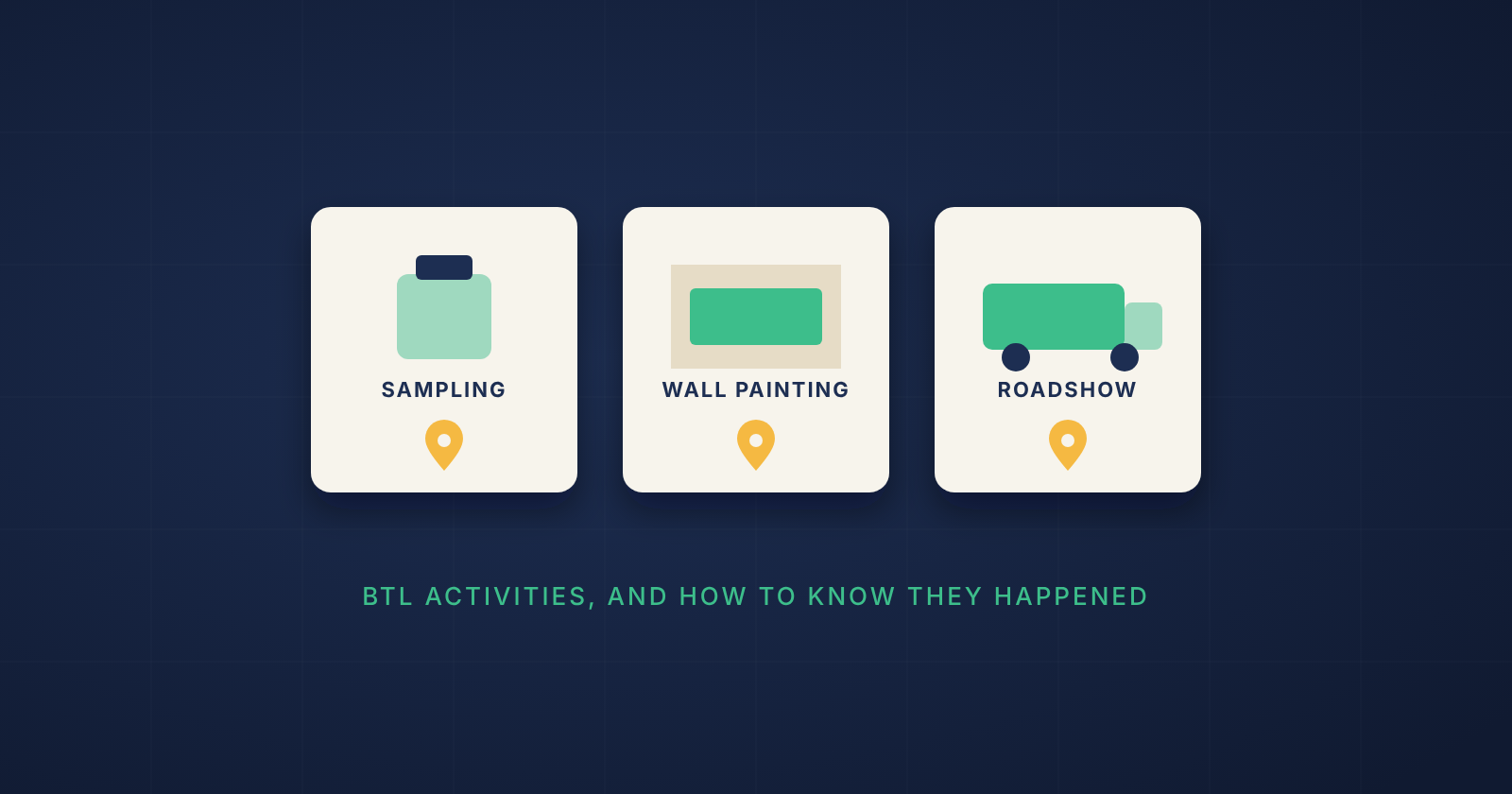
Product sampling | Free samples handed out in stores, markets, offices or societies | Trial of a new product or variant | Photos at each location during the activity, with time and place; samples issued vs returned |
In-store promotions | Promoters, demos or offers inside a retail outlet | Converting shoppers at the shelf | Photo of the setup at the outlet on each day; outlet list vs plan |
Point-of-sale (POSM) branding | Shelf strips, danglers, standees, shop boards | Visibility where the purchase is made | Photo of each installation at the outlet, with the outlet identified |
Retail and shop-front branding | Signboards, shop-in-shop displays, glow signs | Long-term visibility in key outlets | Photo at installation and on a later revisit to show it's still up |
Wall painting | Brand messages painted on walls in towns and villages | Reach in rural and semi-urban markets | Photo of each wall on location, with something in frame to show the size |
Roadshows and van campaigns | A branded vehicle touring towns with demos or entertainment | Covering many small towns in a short time | Photos at each stop with time and place; route plan vs route covered |
Mall and society activations | Stalls, events or games in malls and residential complexes | Engaging urban families face to face | Photos during the activity; footfall or leads captured on site |
Events and exhibitions | Stalls at trade fairs, sponsorships, brand events | Trade buyers, B2B leads, launches | Photos of the stall while live; leads collected |
Dealer and retailer meets | Meetings, trainings or incentives for the trade | Pushing a scheme or new range through the channel | Attendance list, photos during the meet |
Influencer meets | Meets for painters, electricians, mechanics, contractors | Brands sold on a tradesperson's recommendation | Attendance with identity checks, photos during the meet |
College and community activations | Contests, stalls or events at colleges, festivals, local events | Reaching young or local audiences | Photos during the activity with time and place |
Direct mail and loyalty programmes | Mailers, loyalty points, retailer or customer schemes | Retention and repeat purchase | Dispatch and redemption records |
The last column is the one most BTL plans leave out, and it's the one finance asks about when the invoice arrives.
Which BTL activities work best in which industries?
The activity follows the path to purchase: where the customer decides, and who influences them.
FMCG and personal care: sampling, in-store promotions and point-of-sale branding, because the decision is made at the shelf.
Automotive: test-drive camps, mall displays, dealer events and showroom branding, because the decision runs through the dealer.
Paints and building materials: wall painting in smaller towns, dealer branding, and painter, contractor or electrician meets, because the tradesperson often chooses the brand.
Consumer durables and electronics: in-store demos and festive-season promotions, because shoppers compare products in the store.
Alcoholic beverages: outlet branding and on-premise activations, within the advertising rules that apply in each state.
How do you plan and budget BTL activities?
Plan BTL as units, not as a lump sum: so many outlets, walls, days or meets, at an agreed rate per unit, in named locations, with the proof for each unit written into the brief.
A BTL budget that reads "Q3 activations: ₹2 crore" can't be checked. One that reads "sampling in 200 named outlets, two days each, at an agreed rate per outlet-day, proof: a dated, located photo of each setup on each day" can. Planning in units makes the invoice checkable, makes partial delivery visible, and lets you compare cost per unit across vendors and regions. It also makes it obvious, before the work starts, what the vendor needs to send back.
How do you measure the ROI of BTL activities?
Measure in three steps: first prove it happened, then count what it produced, then compare results where it ran with where it didn't.
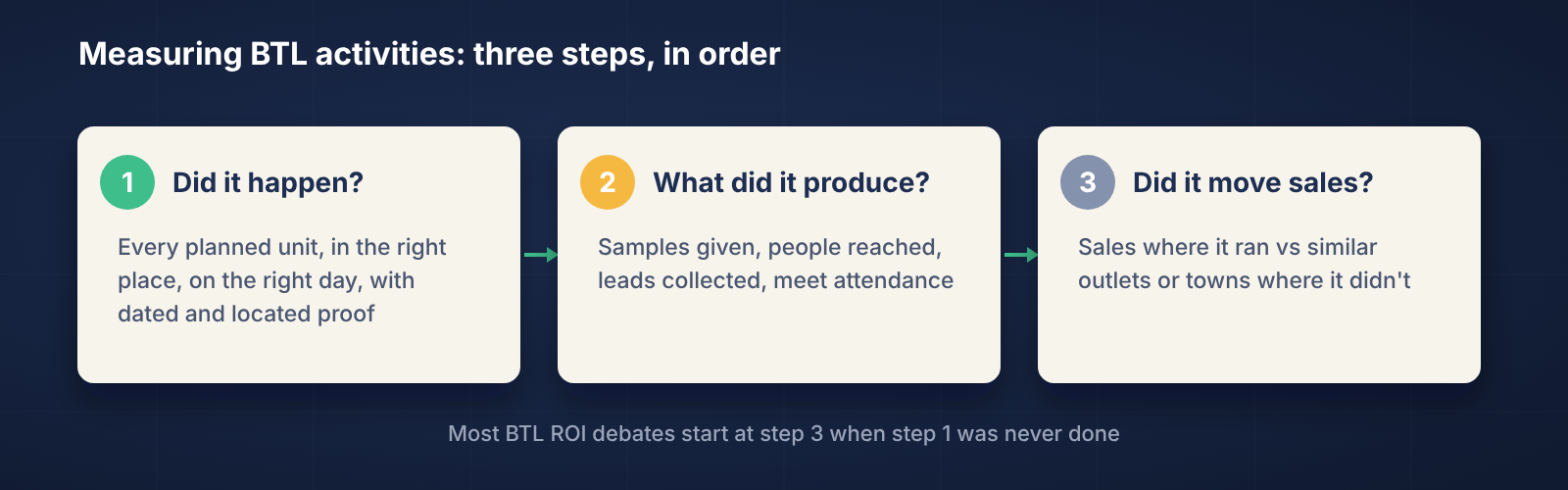
Did it happen? Every planned unit, in the right place, on the right day. Without this, any ROI number is built on the vendor's report.
What did it produce? Samples given, people reached, leads collected, attendees at a meet. These are outputs, not results, but they're measurable and comparable.
Did it move sales? Compare sales in outlets or towns that had the activity with similar ones that didn't, over the same weeks. This is the honest way to estimate impact when many other things are also changing.
Most BTL ROI debates get stuck at step three while step one was never done. Our field guide to proof of execution for on-ground activations covers how to capture proof that holds up.
How does Brandintellé help with BTL activities?
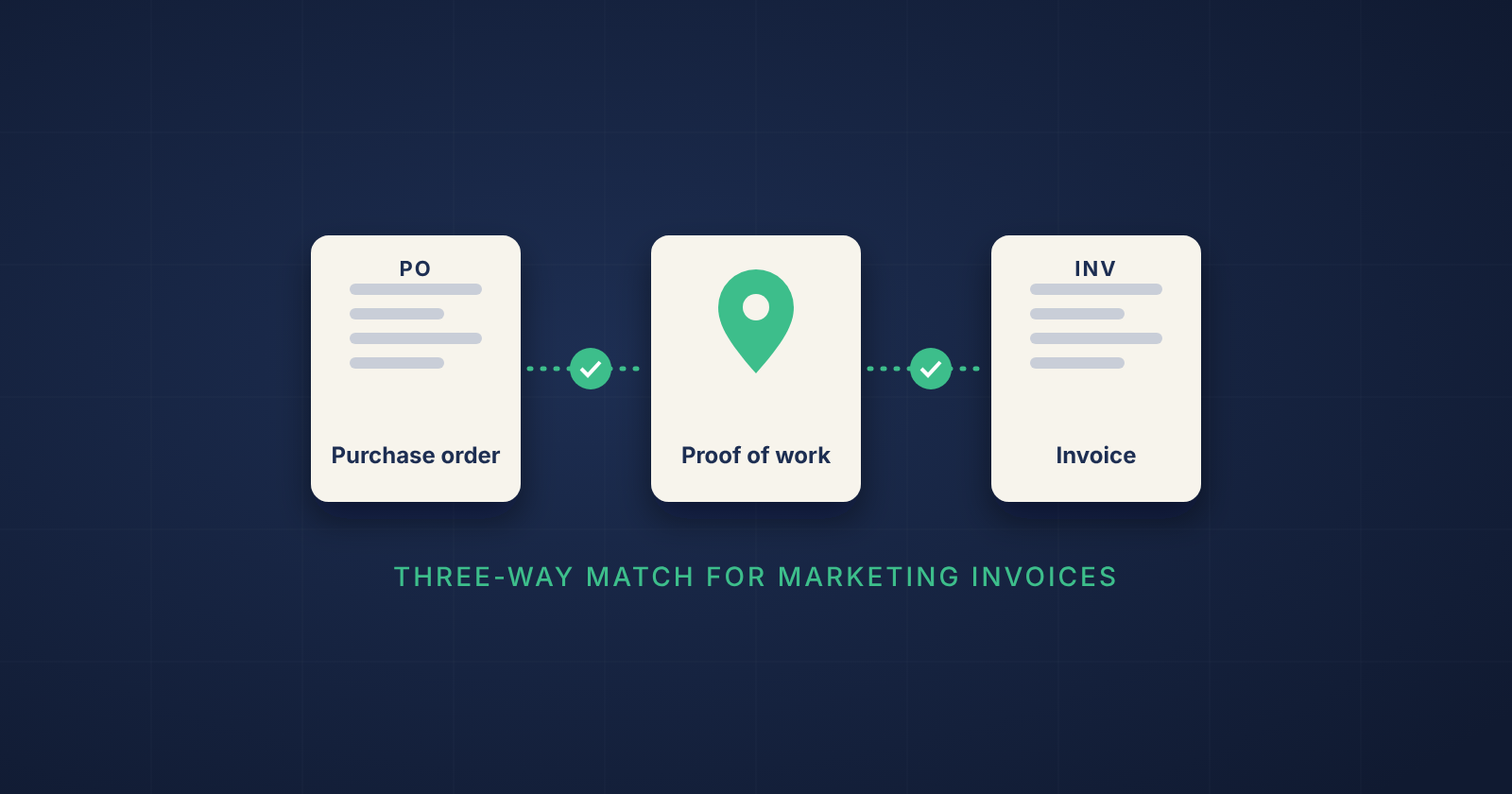
In Brandintellé, proof of on-ground activity is captured on a mobile app: the photo is taken on location inside a geo-fence, stamped with time and place, with no upload from the phone's gallery and no editing. Each photo is attached to the budget line and purchase order it proves, so the invoice can be checked against the work before it's paid.
BTL is where marketing meets the customer. It's also where money most easily goes unseen, unless the proof is planned with the activity.