
Every budget season, finance has to put one number against marketing before marketing has finished asking for it. Here is a simple framework for setting that number so it holds up, for the board and for the year.
If you are the CFO or run FP&A in a large company, the marketing budget is probably one of the hardest lines you set each year. It is large, it is discretionary on paper, its returns are argued about rather than proven, and it tends to be the first place the board looks when the year turns difficult. At the same time you know that cutting it too hard costs you growth you will not see until much later.
This guide gives you a four-step way through it: size the starting number, test it against what marketing brings back, protect the year with agreed scenarios, and release the money in a way that keeps control without starving the plan. It is written for finance, and our CMO's guide to budget season covers the same months from marketing's side, which is useful to know before the two teams sit down.
Key takeaways
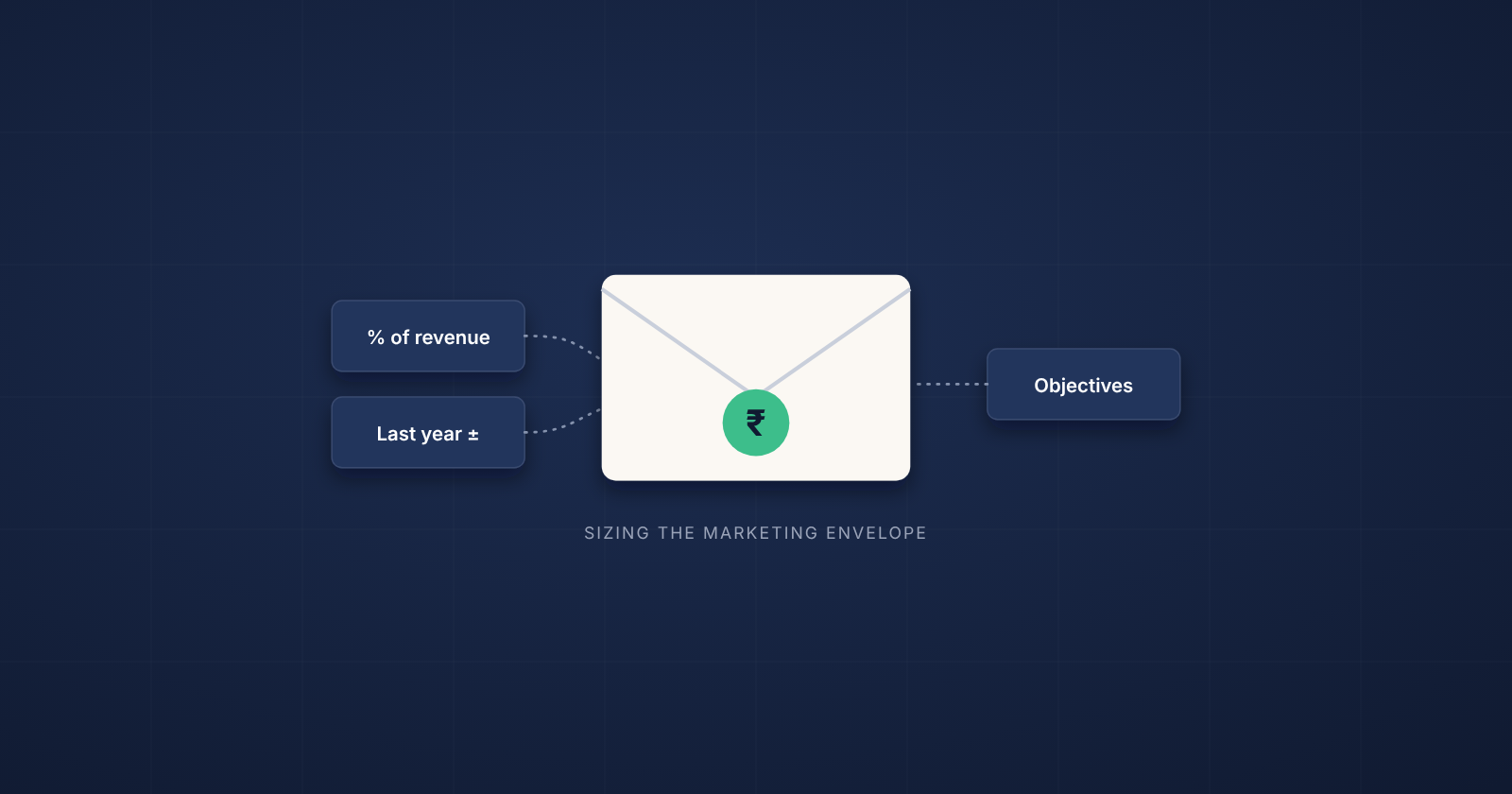
Set the starting number with one method and cross-check it with a second. The common methods are share of revenue, last year adjusted, objective and task, and listed peers.
The gap between finance’s number and marketing’s own plan is useful information, not something to split down the middle.
Ask marketing what’s already committed for next year, because a cut to the total lands entirely on the part that’s still flexible.
Agree two or three scenarios while the budget is being set, so a mid-year cut follows priorities everyone has already agreed.
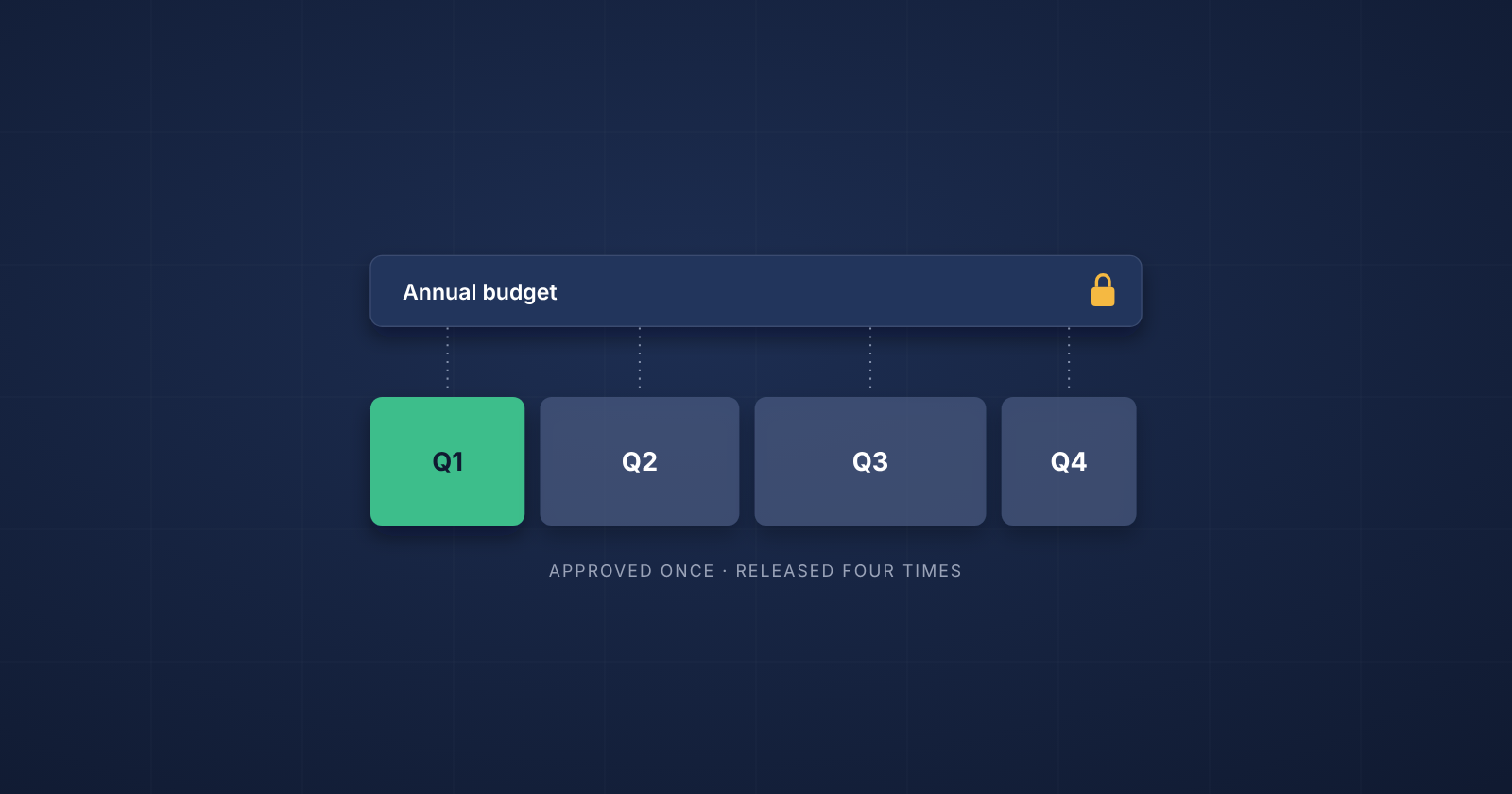
Release the approved budget quarter by quarter, based on what’s committed plus planned activity, and hold back the rest until you see performance.
Step 1: Size the starting number
Most finance teams use one of four methods to arrive at a first figure for marketing, and each one has a place. The trick is to anchor on one and cross-check with a second, so that no single method decides the number on its own.
Method | How it works | Good when | Watch out for |
|---|---|---|---|
Share of revenue | Marketing gets a set percentage of next year's planned revenue | The business is stable and the ratio has held for years | It cuts marketing when revenue dips, exactly when share is cheapest to win |
Last year, adjusted | This year's budget, moved up or down for inflation, growth and priorities | You need a quick, defensible starting point | It rolls forward spend nobody has questioned in years |
Built from marketing's objectives | Marketing costs out the activity needed to hit agreed goals | Launches, new markets, or a real change in strategy | Plans can be generous; every line needs a measurable outcome |
Compared with listed peers | Advertising and promotion as a share of revenue at comparable companies | Checking whether the number is in a sensible range | Peers differ in mix, channels and stage of growth |
The peer comparison is more useful in India than many finance teams expect, because listed companies disclose their advertising and promotion spend. In the nine months to December 2025, for example, Hindustan Unilever spent about 10% of its revenue on advertising and promotion, while several FMCG peers held that spending growth under 5% to protect margins as urban demand stayed weak, as Storyboard18's analysis of FMCG results shows. (Impact analytics of brandintelle)
Step 2: Test it against marketing's plan
While you build your number from the top down, brand and category teams build theirs from the bottom up, and the two will not match. That gap is not a problem to be closed by splitting the difference; it is the most useful information you will get all season, because it shows you where marketing thinks the growth is and what it believes it needs.
So instead of negotiating the total, ask for the plan in a shape you can test. These are the questions that do the most work:
What did this year's budget actually buy? Planned, committed and spent, and why money moved during the year.
What is each major line for? The business outcome behind it, in volume, distribution, launches or share.
What is already committed for next year? Media deals, retainers and contracts that carry into April.
What would you protect, and what would you trade? Marketing's own priorities if the number comes in lower.
When do you need the money? The quarterly phasing around seasonal peaks.
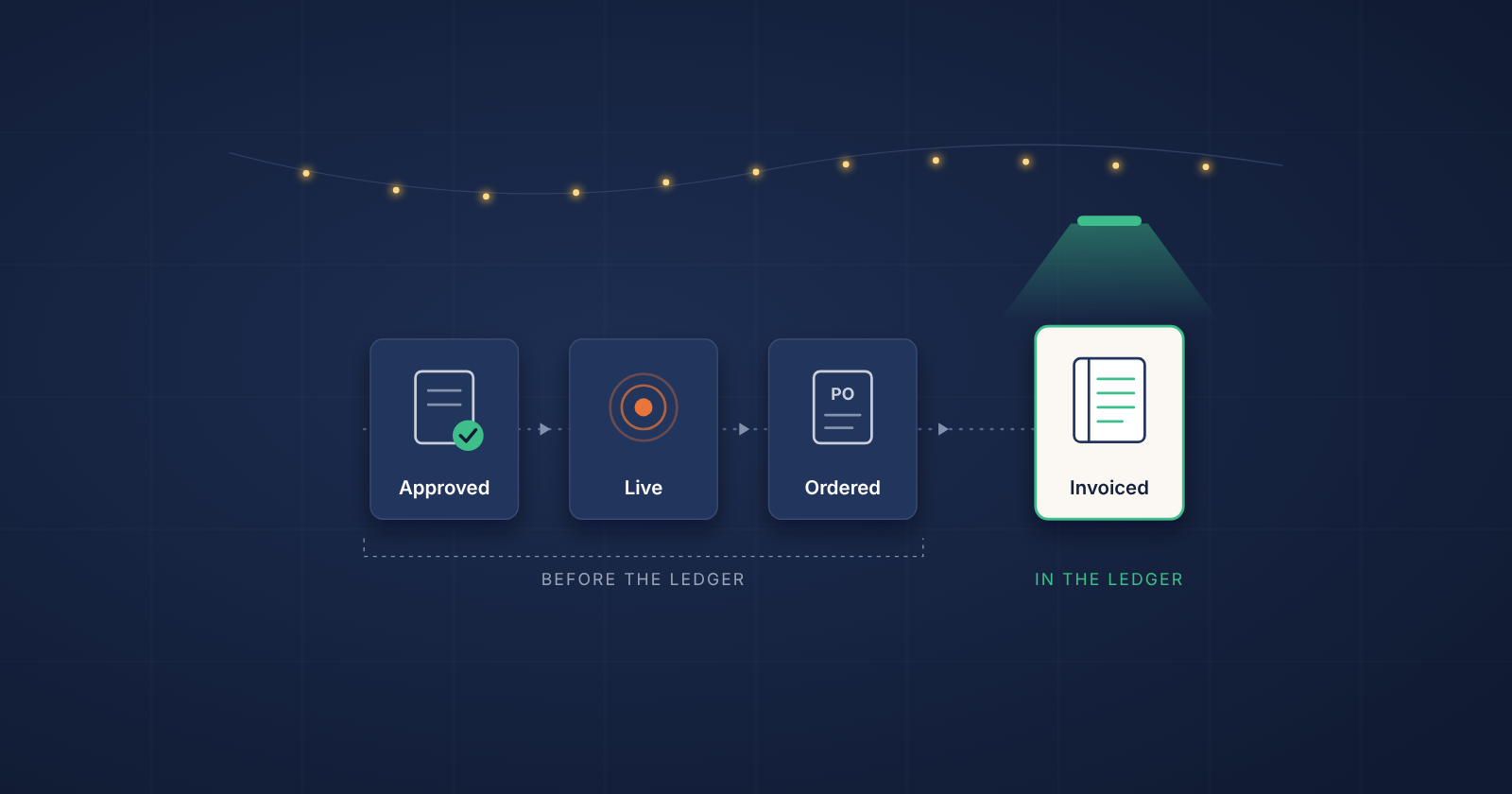
The third question matters more than it looks. Annual media deals, retainers and multi-year contracts land on next year's books whatever the annual budget decides, so a discussion about trimming 10% of the total is really a discussion about trimming a much larger share of the flexible part. Our guide to committed vs actual marketing spend explains how to keep track of that line once the year starts.
Step 3: Protect the year with agreed scenarios
The moment that damages the relationship between finance and marketing is rarely the budget meeting. It is the mid-year cut, made in a hurry when volumes fall short, with nobody quite sure which commitments can be undone. A better approach is to agree to two or three scenarios while the annual budget is being set, so that a future cut becomes a decision the two teams have already made together.
Here is what that can look like. The numbers below are illustrative.
Base case | Volumes 10% below plan | Volumes ahead of plan | |
|---|---|---|---|
Planned revenue | ₹2,000 crore | ₹1,800 crore | ₹2,150 crore |
Marketing budget | ₹160 crore | ₹140 crore | ₹172 crore |
Already committed (media deals, retainers) | ₹60 crore | ₹60 crore | ₹60 crore |
Flexible spend | ₹100 crore | ₹80 crore | ₹112 crore |
What changes | Plan as agreed | Hold back new-market activity and the second half's brand campaigns; protect the two lead brands | Release the held-back balance to the brands ahead of plan |
Two things stand out when you lay it out this way. The committed ₹60 crore does not move in any scenario, so the real cut in the downside case falls on a much smaller base than the headline suggests. And because the protected lines are written down in February, nobody has to argue about them in September.
Step 4: Release it quarter by quarter
Once the annual number is approved, most large Indian companies release it a quarter at a time, against an agreed phasing that follows the seasons rather than an equal split, and re-forecast at the half-year and again around the third quarter. Releasing against what is already committed for the quarter plus planned activity, and holding the balance against performance, keeps control without starving the plan. Our guide to running the marketing budget quarter by quarter sets out the release calendar and the rules worth agreeing up front.