
The annual marketing budget gets all the attention, but the quarterly release is what actually decides what marketing can spend. This is a playbook for running it well.
If you are the person in finance who runs the marketing budget once the year has started, you will recognise the pattern. The annual budget approved a number for the year, and everyone talks about that number, but what governs spending from April onwards is something else: the quarterly release, the outlook for the quarter and the reforecasts at the half-year and around the third quarter. Marketing, meanwhile, signs media deals and vendor contracts that run for the full year, so they are committing on an annual clock while the money arrives on a quarterly one.
Most of the friction between finance and marketing during the year comes from that mismatch, and most of it can be removed with three things agreed in advance: a calendar, a set of release rules, and a list of the events that trigger a reforecast. This playbook gives you all three.
Key takeaways -
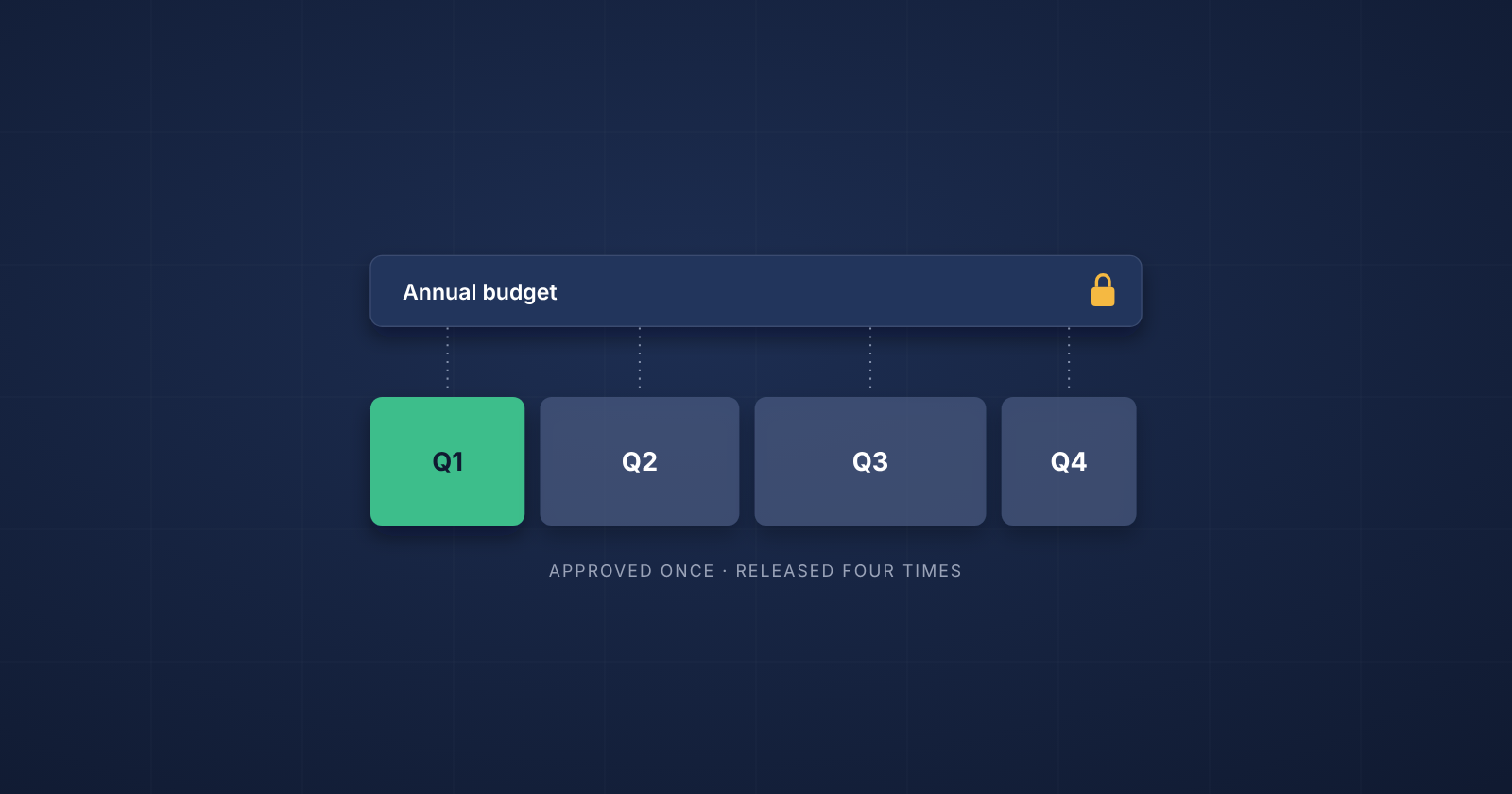
The annual budget is approved once, but what governs spending is the quarterly release, the quarter’s outlook and the reforecasts.
Agree three things before April: a calendar, a short set of release rules and a list of the events that trigger a reforecast.
Base each quarter’s release on what’s already committed plus planned activity, not on a flat quarter of the annual number.
Compare outlook, commitments and actual spend every month, so the half-year reforecast holds no surprises.
When margins are under pressure, cut flexible spend by agreed priority, not evenly across every line.
Part 1: The calendar
When | What you do | Who is involved | What comes out of it |
|---|---|---|---|
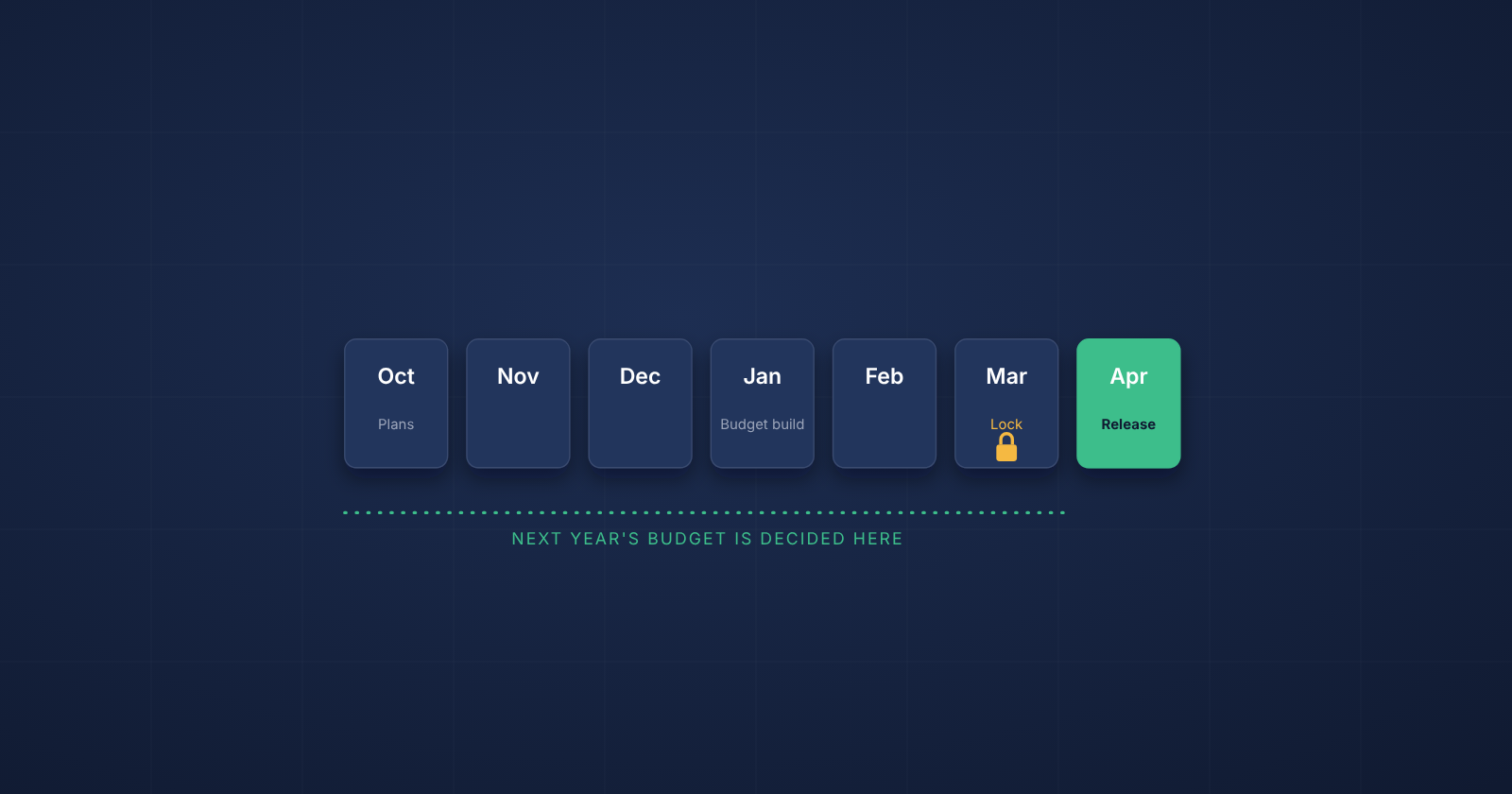
Before April | Agree the phasing by quarter and the release rules | Finance, marketing heads, CFO | An approved phasing and a one-page set of rules |
Start of each quarter | Set the release for the quarter | Finance, brand and regional heads | The quarter's released budget by line |
Every month | Compare outlook, commitments and actual spend | Finance and marketing finance | A short variance note with reasons |
End of the first quarter | First check against the plan | Finance, marketing heads | Early adjustments, usually small |
Half-year close | Full reforecast for the second half | Finance, marketing, CFO | A revised outlook for the rest of the year |
Around the third quarter | Second reforecast, often after the festive season | Finance, marketing, CFO | Final adjustments and what can still be spent well |
Last quarter | Close the year and carry commitments into next year | Finance, marketing | A clean list of commitments running past March |
The monthly row is the one most teams skip, and it is the one that makes the others easy. If finance sees each month what has been committed and why it differs from the outlook, the half-year reforecast becomes a review of things everyone already knows rather than a surprise. Our guide to committed vs actual marketing spend explains how to see those commitments before the invoices arrive.
Part 2: The release rules template
These are the rules worth writing down before the year starts. The examples in the right-hand column are illustrative, so replace them with what fits your business.
Rule | What to agree | Example |
|---|---|---|
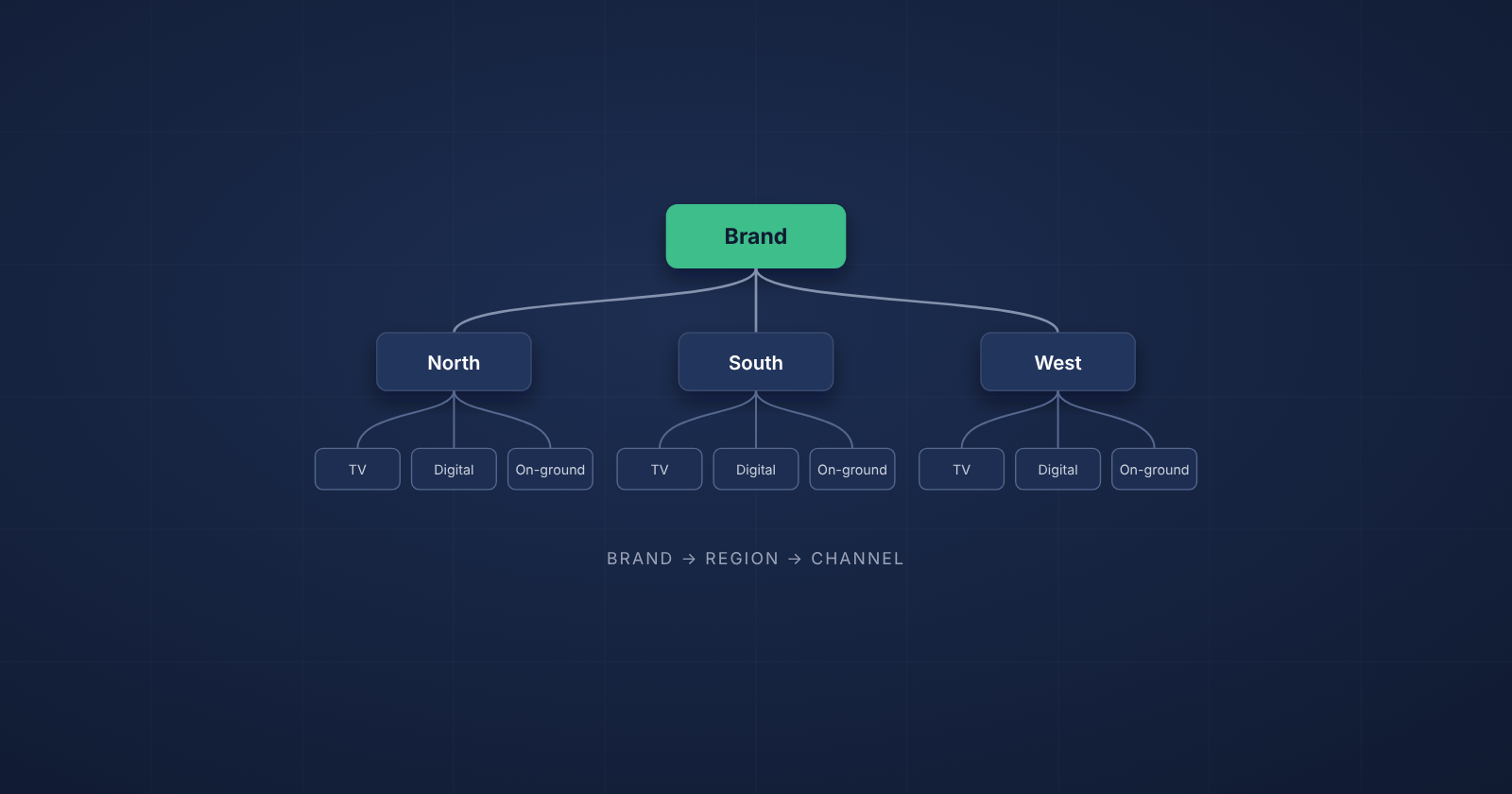
Phasing | How the annual budget is spread across quarters | Follow the seasons: 20% / 25% / 35% / 20%, with the festive quarter heaviest |
What a release is based on | The starting point for each quarter's release | Commitments already made for the quarter plus planned activity, not a flat share of the annual number |
Held-back balance | How much is kept back, and what releases it | 10% of each brand's quarter, released when volumes are on plan |
Protected lines | What is never cut mid-year | Lead brands' always-on media and contracted sponsorships |
Moving money between lines | Who approves a move, and up to what amount | Brand head up to ₹50 lakh within their brand; CFO above that or across brands |
Increases | Who can raise a line's budget | Only the CFO, and only from the held-back balance or a reforecast |
Unspent money | What happens to budget not used in a quarter | Rolls forward within the year for planned activity; returns to the pool if the activity is cancelled |
The second row is where many teams go wrong. Releasing a flat quarter of the annual budget ignores the media and contracts that were already signed for that quarter, so marketing either runs short or receives money it cannot use. Starting from commitments plus planned activity gives a release that matches how the money will actually be spent.
Part 3: The reforecast triggers
Reforecasts are far less painful when everyone agreed in advance what would cause one. These are the triggers that come up most often in large Indian companies.
Trigger | What to check | Typical response |
|---|---|---|
Volumes behind plan by an agreed margin | Which brands and regions are behind, and why | Hold back the reserved balance; protect the agreed lines |
A launch slips or is cancelled | What was committed for it, and what can be redirected | Move uncommitted money to another brand or the next quarter |
The festive season or a peak arrives early or late | Whether the phasing still matches the season | Bring a release forward or push it back a quarter |
A weather season changes demand | Summer for cooling products, the monsoon for building materials | Rephase between quarters rather than cutting |
A policy change in a state or market | Which regions are affected | Move budget between states or regions |
Cost pressure on margins | What the company needs from marketing to protect profit | Reduce flexible spend by agreed priority, not across the board |
The last row played out across large FMCG companies last year. In the nine months to December 2025, several held their advertising and promotion growth under 5%, and some spent slightly less than the year before, as weak urban demand and margin pressure pushed them to protect profitability, according to Storyboard18's review of FMCG results. Decisions like that are far easier to make well when the rules for them were agreed at the start of the year.
When marketing needs to move money between lines inside a quarter, the same thinking applies on a smaller scale, and our piece on reallocating marketing budget mid-quarter covers what a good request looks like from their side. The calendar itself starts long before April, and our CMO's guide to budget season covers how the phasing gets built.
Frequently asked questions
What is a quarterly budget release in marketing?
It is the practice of approving the marketing budget for the full year but making it available to spend one quarter at a time. At the start of each quarter, finance releases an amount for each line, usually based on what is already committed plus planned activity, and holds part of it back against performance.
How should large companies phase the advertising and promotion budget across quarters?
Approve the full-year advertising and promotion budget once a year, then release it quarter by quarter against an agreed phasing that follows seasonal peaks rather than an equal split. Base each release on what is already committed for that quarter plus planned activity, hold the balance against volume performance, and agree in advance which brands and activities are protected if a mid-year cut is needed.
When should the marketing budget be re-forecast?
Most large companies re-forecast at the half-year close and again around the third quarter. Outside those points, a re-forecast should be triggered by agreed events, such as volumes falling behind plan by a set margin, a launch slipping, a seasonal peak moving, or a policy change in a key market.
What is the difference between the annual budget and the quarterly outlook?
The annual budget is the total approved for the year, and it rarely changes once locked. The quarterly outlook is the current best estimate of what will be spent in each quarter, and it is updated as the year goes on. In practice the outlook, not the annual figure, governs what marketing can spend at any point.
How does a marketing spend governance tool like Brandintellé support quarterly budget releases?
It shows each budget line's annual budget, quarterly outlook, available balance and consumed spend month by month, so finance can release against real commitments. Increases, decreases and moves between lines go through approval limits set by line and amount, and each request shows its status, from requested to approved, rejected with a reason or on hold.
The annual budget is a promise. The quarterly release is where you keep it, and it is much easier to keep when everyone agreed the rules before April.
See how Brandintellé tracks budget, outlook and spend by quarter.