
Somewhere between now and March, the number that decides what your team can do next year will be agreed. This guide walks you through that season month by month, and ends with the checklist to take into the budget meeting.
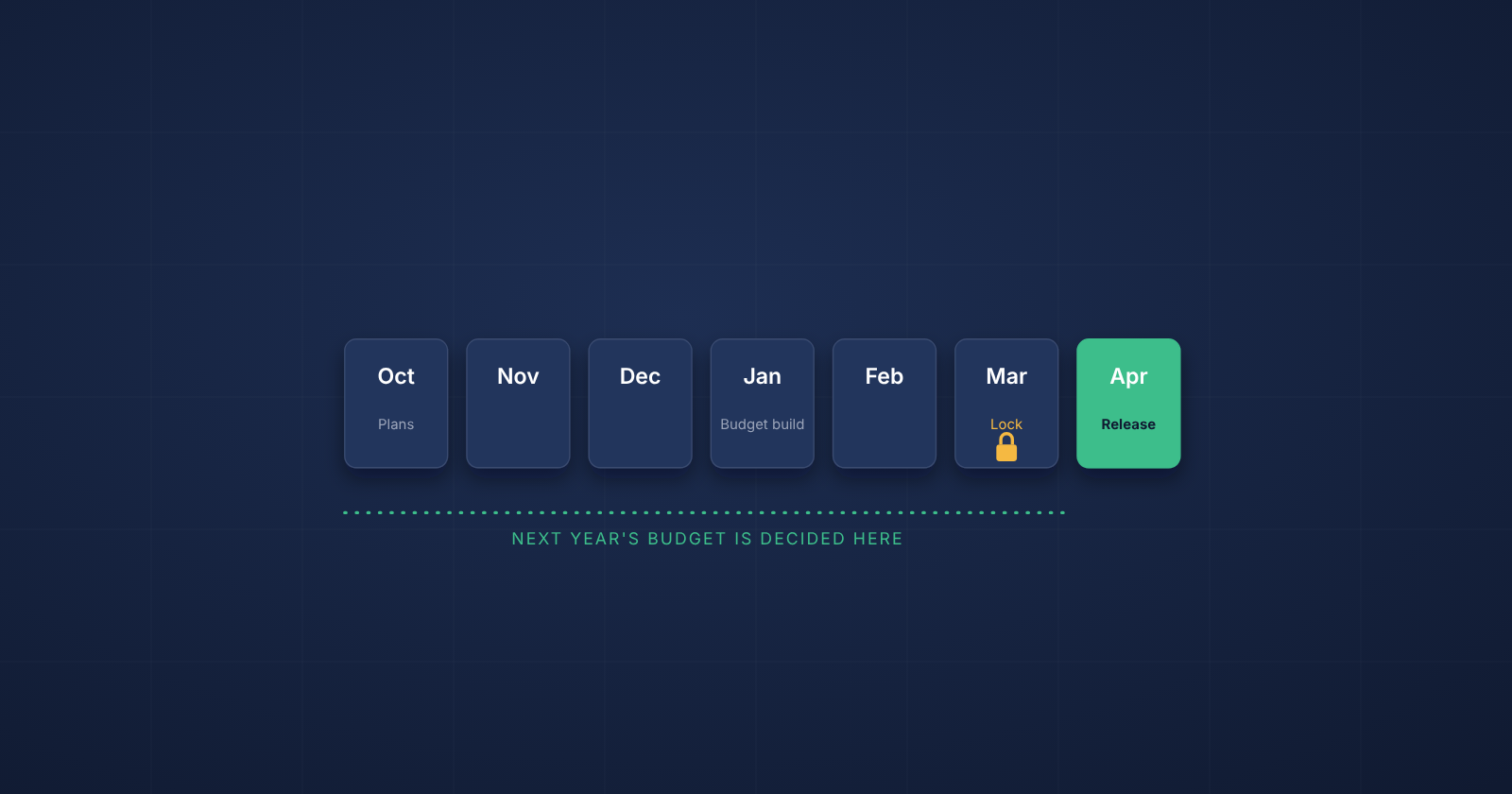
If you run marketing for a large Indian company, you already know that next year's marketing budget is not settled in one meeting. It starts quietly around October with brand and category reviews, turns into weeks of back-and-forth with finance through the winter, and ends with a number that is locked in March and released from April. By the time the year actually begins, most of the important decisions about your budget have already been made, and the ones you did not prepare for were usually made by someone else.
So think of this page as your map for the season. It shows what happens when, what you should have ready at each point, and where to go deeper on each part of the work, from how finance sizes your budget to how you split it across brands and regions.
Key takeaways -
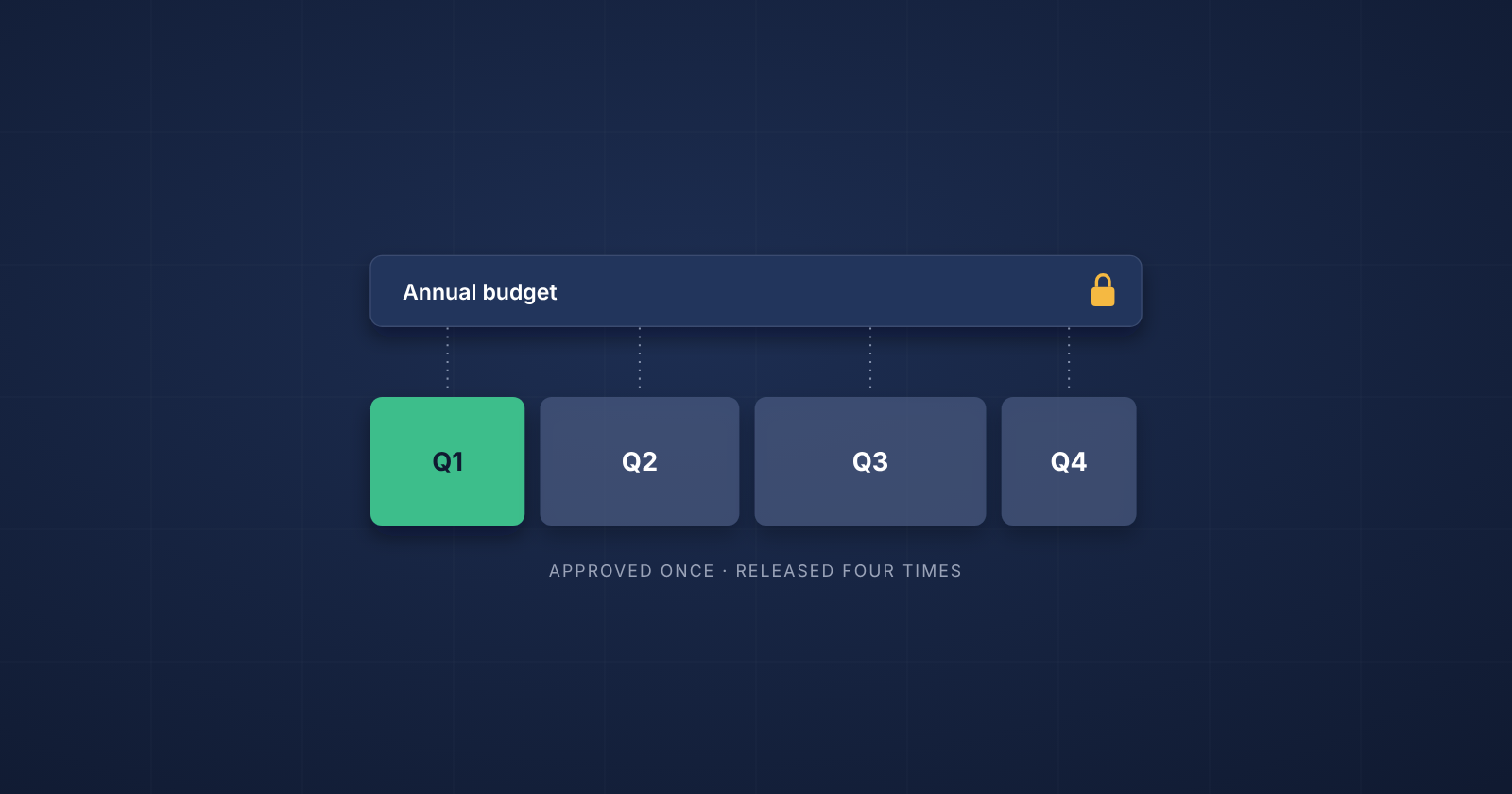
Next year’s marketing budget is decided between October and March. It’s locked in March and released from April, usually a quarter at a time.
Start with an honest look at this year: what you planned, committed and spent, and why money moved. Finance will look at this anyway.
Build your plan by brand, region, channel and activity before finance’s own number arrives, and tie every major line to a business result.
Show what’s already committed for next year separately from what’s still open, so the flexible part of the budget isn’t quietly used up.
Plan by quarter around your seasonal peaks, and keep part of the budget unallocated at brand or category level so you can move it later.
Your budget season at a glance
The exact dates move from company to company, but across automotive, FMCG, alco-bev, consumer durables and building materials the rhythm is remarkably similar.
When | What happens | What you should have ready |
|---|---|---|
October | Brand and category reviews; this year's performance is discussed | An honest one-page read of this year: planned, committed, spent, and why money moved |
November | Strategic plans for next year; priorities set | Your priorities in order, and the business outcome each one serves |
December to January | The budget is built: marketing submits its plan, finance arrives with its own number | A bottom-up plan by brand, region, channel and activity |
February | Negotiation and scenarios; management review | What you would protect, what you could trade, and what is already committed |
March | Board or management approval; the annual number is locked | Quarterly phasing around your seasonal peaks |
April onwards | The year opens and money is released, usually a quarter at a time | A reporting rhythm finance can rely on |
The point of laying it out like this is simple: the decisions that shape your year happen in the first four rows, and most marketing teams only really engage from the fifth.
October: start from what this year actually taught you
The strongest budget plans do not start with next year's ambition. They start with an honest read of this year: what you planned, what you actually committed, what moved during the year and why, and what you would not spend again. Finance will look at all of this anyway, so it is far better that the first version of that story comes from you.
Two numbers matter more than the rest. The first is how much of this year's budget was already committed by the time each quarter started, because that tells you how much room you really had, and our guide to committed vs actual marketing spend explains how to read it. The second is how often, and why, money moved between your lines, because a plan that needed constant moves is usually a plan that was structured badly rather than one that was too small. If you have been writing down the reasons behind those moves, as we suggest in our piece on reallocating marketing budget mid-quarter, this part of the work is already half done.
December: build your plan before finance's number arrives
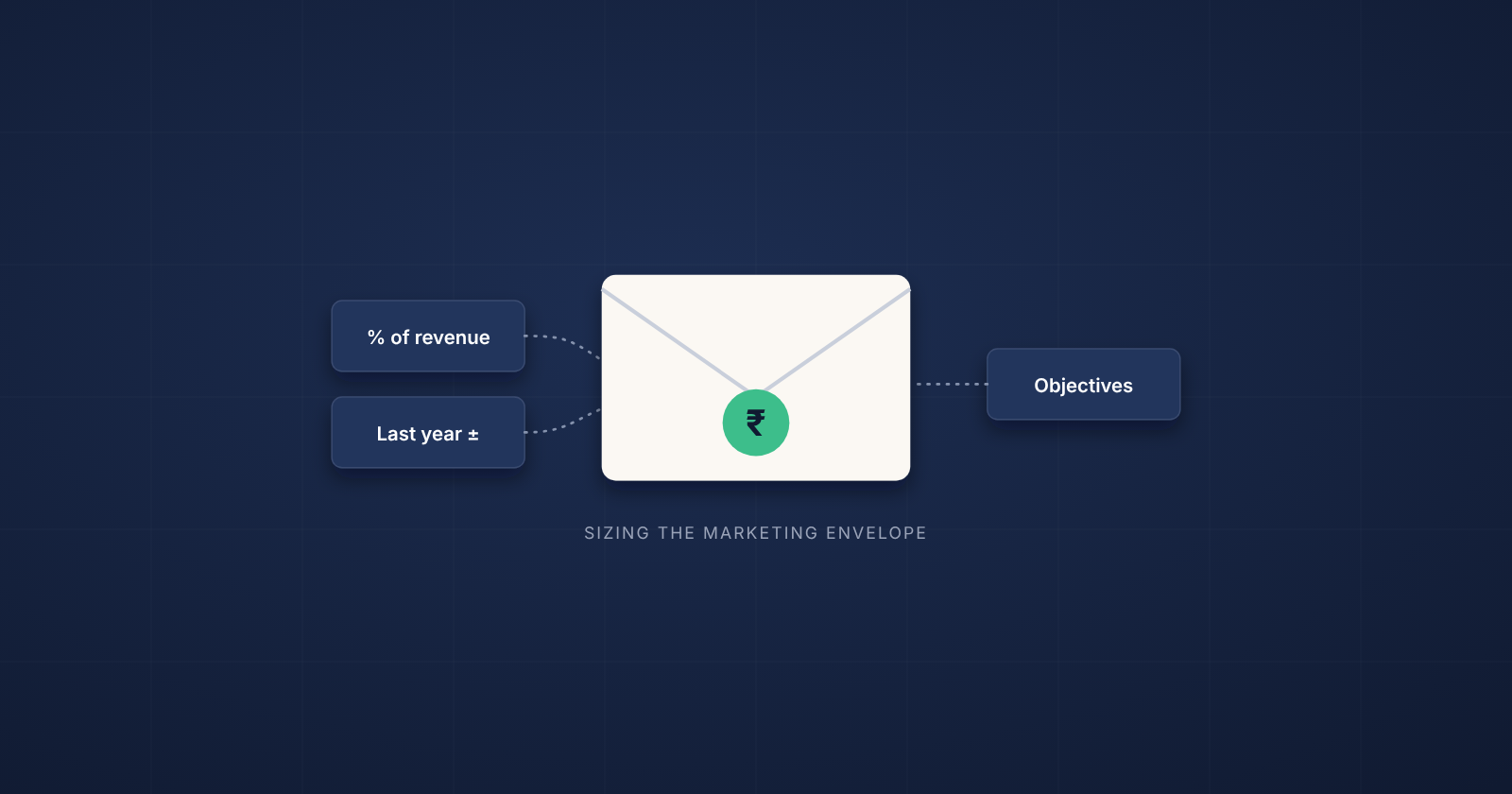
In most large companies, two numbers meet during budget season. Finance builds a top-down number for marketing, usually as a share of planned revenue or as last year's figure adjusted up or down, and brand and category teams build their plans from the bottom up. The two are then reconciled, and that reconciliation is far more of a negotiation than a calculation. It helps to know exactly how finance builds its side, and our guide for CFOs on setting the marketing budget walks through the methods and the questions you will be asked.
Whoever shows up with the better-built number tends to win that negotiation, so build yours early and tie every major line to an outcome finance cares about, whether that is volume, distribution, a launch or share in a priority region. The scale of the conversation makes this worth the effort. In Gartner's 2025 CMO Spend Survey of large companies in North America and Europe, marketing budgets sat at 7.7% of company revenue, and 59% of CMOs said that was not enough for their strategy. Closer to home, Hindustan Unilever spent ₹4,752 crore on advertising and promotion in the nine months to December 2025, about 10% of its revenue, while several FMCG peers held that spending growth under 5% to protect margins as urban demand stayed weak, according to Storyboard18's review of FMCG results. A line that size will always be questioned, and the case for your share has to be made before the number is set, not after.
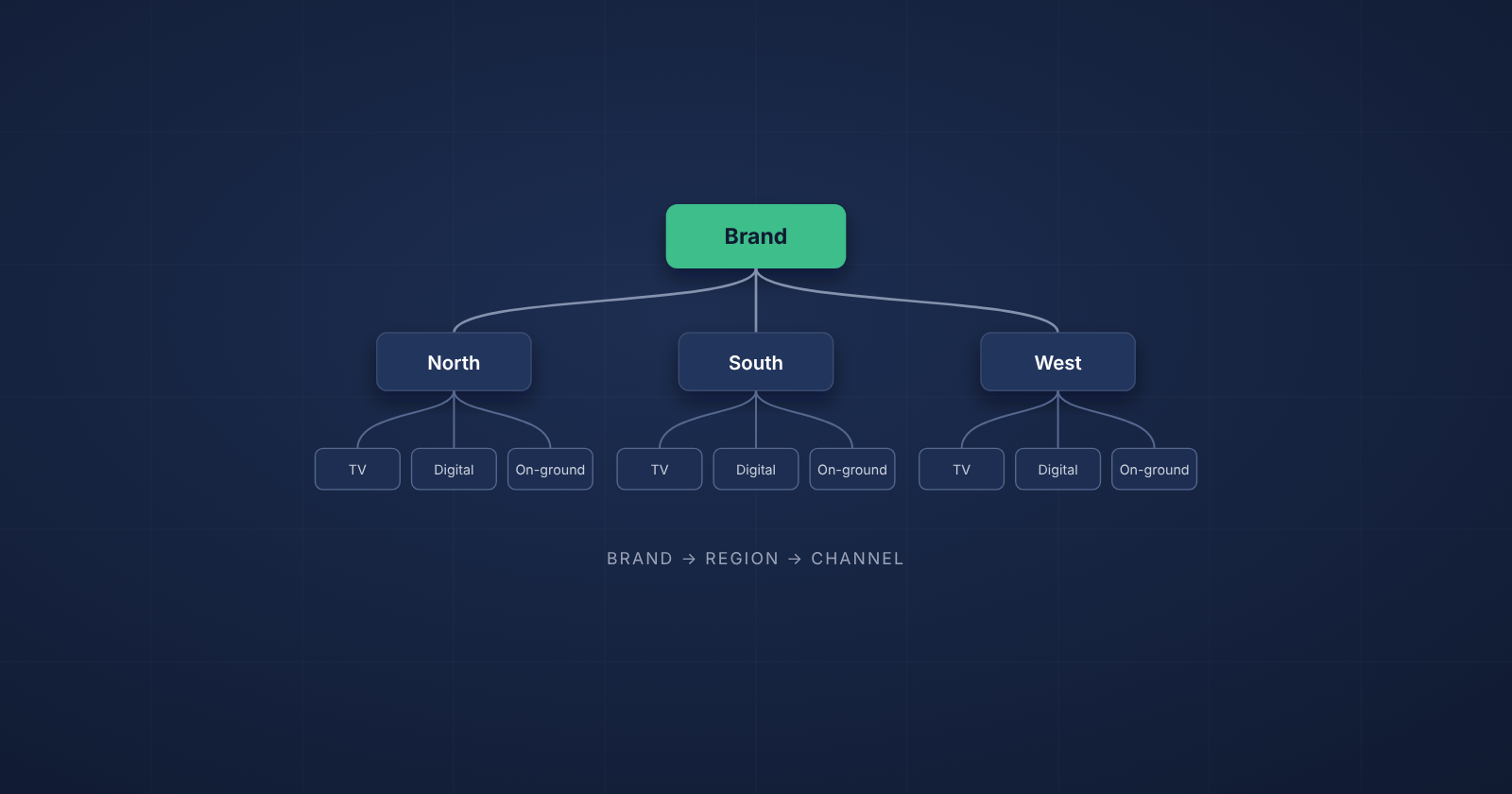
The hardest part of the bottom-up plan is usually the split itself: how much goes to each brand, each region and each channel. We have compared the main ways large companies make that split, and when each one works, in our guide to marketing budget allocation.
February: separate what is already spoken for from what is genuinely open
A surprising amount of next year's budget is decided before the year begins. Annual media deals, retainers, long-term sponsorships and contracts that run across financial years all carry into April, whether or not anyone mentions them in the budget meeting. If you present your plan as one big number, those commitments quietly eat into the flexible part, and you discover in June that the money you thought you had was never really free.
So show the two separately: what is already committed or contracted for next year, and what is genuinely open to plan. It makes the negotiation more honest, and it protects the money you will need when the market moves. While you are at it, agree the structure of the budget with finance too, so that every line in your plan maps to exactly one line in the approved budget and nobody spends the year keeping a second spreadsheet.
March: plan for the quarters, not just the year
In many large Indian companies the annual budget is approved once but released quarter by quarter, and reforecast at the half-year and again around the third quarter. That makes the annual number a ceiling, and the figure that actually governs what you can spend in any month is the quarterly outlook. So phase your plan by quarter around the moments that matter for your category, such as the festive season, summer for cooling products, the monsoon for building materials, launches and big sporting events. And keep part of the year's budget unallocated at brand or category level rather than splitting all of it on day one, because moving money out of that pool later is far easier than taking it back from someone who has already planned to spend it. Our guide to running the marketing budget quarter by quarter shows how finance usually runs those releases, which is worth knowing before you agree to them.
The budget meeting checklist
Take this into the meeting where your budget is negotiated. Each item answers a question finance will ask whether or not you bring it, so it is better to arrive with it.
Bring this | What it shows | The question it answers |
|---|---|---|
This year on one page: planned, committed, spent, and the main reasons money moved | You know where this year's money went | "Why should we trust next year's plan?" |
Next year's plan by brand, region, channel and activity | The plan is built the way it will be spent | "What exactly are we funding?" |
The business outcome behind each major line | Spend is tied to results finance cares about | "What do we get for this?" |
What is already committed for next year, shown separately | How much of the budget is genuinely flexible | "How much of this can actually move?" |
Your priorities in order: what you would protect and what you could trade | You have thought about a smaller number | "What happens if we give you less?" |
Quarterly phasing around your seasonal peaks | When the money is needed | "How much do you need in each quarter?" |
How you will report against the budget each month, and when you will bring requests to move money | The year will be run with no surprises | "How will we know how it is going?" |
If you can hand over all seven, the conversation moves away from whether marketing deserves its budget and towards which version of the plan the company wants to fund, which is a much better conversation to be in.
Frequently asked questions
How do I build an annual marketing budget for a large company?
Start in October with an honest review of this year: what was planned, committed and spent, and why money moved. Build a bottom-up plan by brand, region, channel and activity before finance's top-down number arrives, tie each major line to a business outcome, show what is already committed for next year separately from what is open, and phase the plan by quarter around your seasonal peaks. The budget is usually locked in March and released quarterly from April.
What is the annual operating plan (AOP) in marketing?
The annual operating plan, often shortened to AOP, is the plan and budget a company approves for the coming financial year. For marketing, it is where next year's budget is built, negotiated with finance and locked. In most large Indian companies it is prepared between October and February, approved in February or March, and released from April, often a quarter at a time.
How should marketing and finance work together on the marketing budget?
Agree the structure, the approval rules and the review calendar while next year's budget is being built, rather than after it. Marketing brings a bottom-up plan tied to business outcomes and a clear view of what is already committed; finance brings its top-down number and the company's constraints. The two are reconciled once, and then both sides work from the same numbers through the year.
How does a marketing spend governance tool like Brandintellé help with budget planning?
It holds the budget in the same structure you plan in, by brand, region, channel and activity, with as many levels as the business needs. Each line shows its budget, quarterly outlook, available balance and what has been consumed, month by month. Plans can be built directly or uploaded from a spreadsheet template, and later moves between lines follow your own approval limits.
The budget you get next year is decided this season. Build it before someone builds it for you.
See how Brandintellé structures marketing budgets by brand, region and channel.